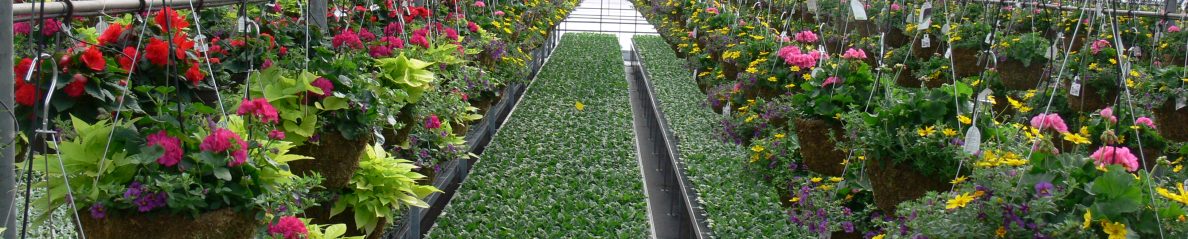
Producing Million Bells – 2025 Update

This post was written by Abigail Wiesner, Acting Floriculture Production Specialist, with content contributions from Chevonne Dayboll.

With Million Bells (Calibrachoa) having filled up the greenhouse, it’s a great time to revisit our production practices and explore new ideas. This post contains some back to the basic’s information and new innovations for our favourite spring crop.

Continue reading “Producing Million Bells – 2025 Update”

In Case you Missed it: a Demo of Ontario’s Crop Protection Hub

Still unfamiliar with Ontario’s Crop Protection Hub (fondly referred to as “Crop Hub”) and want to know more about it? This recorded webinar tells you everything you need to know.

In this video, we’ll walk you through examples on how to:

  • Look up products for specific pests
  • Compare efficacies of pesticides and fungicides for Ontario pests
  • Look up compatibility of chemical products with natural enemies
  • Print out lists of products for a specific IPM plan

Continue to the full blog post to watch the embedded video now, or go to https://youtu.be/v2SeHnd9qY0!

Continue reading “In Case you Missed it: a Demo of Ontario’s Crop Protection Hub”

Aphicide Awareness: Reports of Phytotoxicity on Ornamentals

After my previous post outlining how Ontario growers may be experiencing resistance to Beleaf (flonicamid), several growers are experimenting with alternate aphicides (chemicals that control aphids) this spring. These growers tested products on small batches of crops at high rates, to look for phytotoxicity, and have passed on their results to share with the rest of you.

Keep reading to see which products are affecting which crops, and how you can help mitigate issues with phytotoxicity from insecticides.

Continue reading “Aphicide Awareness: Reports of Phytotoxicity on Ornamentals”

Managing Million Bells: 2025 Updates

Fe def calibrachoa

It’s that time of year again, when Million Bells (Calibrachoa) are being started in the greenhouse.  

This post will discuss common insect and disease pests, such as aphids, thrips and black root rot and viruses.

Stay tuned for an upcoming post about production tips and tricks for this popular spring favourite.

Continue reading “Managing Million Bells: 2025 Updates”

Is Beleaf Still Working for Aphid Control? What We Know So Far and Alternative Chemicals for Spring 2025.

For those of you relying on chemical control for aphids in spring crops, some of you might have observed that Beleaf (Aria in the U.S.) has not been working as well recently, especially in green peach aphid (Myzus persicae).

This post will fill you in on what we know about potential resistance to flonicamid in aphids, and which chemicals are working.

Continue reading “Is Beleaf Still Working for Aphid Control? What We Know So Far and Alternative Chemicals for Spring 2025.”

New Program Offer from Enbridge

This post was originally written by Abigail Wiesner, Acting Greenhouse Floriculture Production Specialist.

Check out the one-of-a-kind incentive program from Enbridge. Offering 3 times the standard rate for energy efficiency projects. Read on to see how you qualify.

Continue reading “New Program Offer from Enbridge”

Updates on Fungus Gnat Control in Greenhouse Ornamentals 2024

Fungus gnats and shoreflies will always be a nuisance in greenhouse crops and, at high levels, potentially damage roots and transmit certain plant pathogens. Recently, key pesticides for these pest have been lost, either through de-registration or via production decisions from manufacturers. Read on to see options for controlling fungus gnats in greenhouse crops.

Continue reading “Updates on Fungus Gnat Control in Greenhouse Ornamentals 2024”

Strategic Solutions for Substrate Success!

This post was originally written by Abigail Wiesner, Acting Greenhouse Floriculture Production Specialist.

For the last few decades, growers in North America have been reading headlines about the steady decline of peat used for horticultural purposes across multiple European countries. With Canadian sources of peat, and trade primarily between the United States, local growers haven’t been severely affected by global changes in peat use and reduction trajectories.

Even though Canadian growers haven’t seen the same reduction of peat use in the local market, it doesn’t mean we can’t learn from Europe’s goals, decisions, and success stories.

Read on to learn about the benefits of trialing new components for your media mixes.

Continue reading “Strategic Solutions for Substrate Success!”

In Case You Missed It: Webinar on Predator-Prey Interactions – Secrets of Thrips Biocontrol

In case you’re not in the know, Greenhouse Product News (GPN) Magazine has a great plant health webinar series (sign up for it using this link!). This month, I recorded a webinar for them taking a deep dive into predator-prey interactions between thrips and their natural enemies.

If you’ve ever wondered why IPM specialists like myself recommend multiple biocontrol agents at once for optimal thrips control, or why rates of natural enemies need to be so high, then this webinar is for you.

Continue reading “In Case You Missed It: Webinar on Predator-Prey Interactions – Secrets of Thrips Biocontrol”

“COMMUNITY” PEST ALERT: Spotted Lanternfly

Originally published on the ONgreenhousevegetables blog on  by Cara McCreary

A spotted lanternfly adult. Photo by APHIS.

They may be pretty, but they aren’t our friends. Spotted lanternfly (SLF) is an invasive sap-feeding planthopper with potential to harm agriculture and forestry in Ontario.

But I only grow greenhouse fruits and vegetables, so why does it matter to me, you ask? Read on to learn more about why this pest matters to everyone.

Continue reading ““COMMUNITY” PEST ALERT: Spotted Lanternfly”